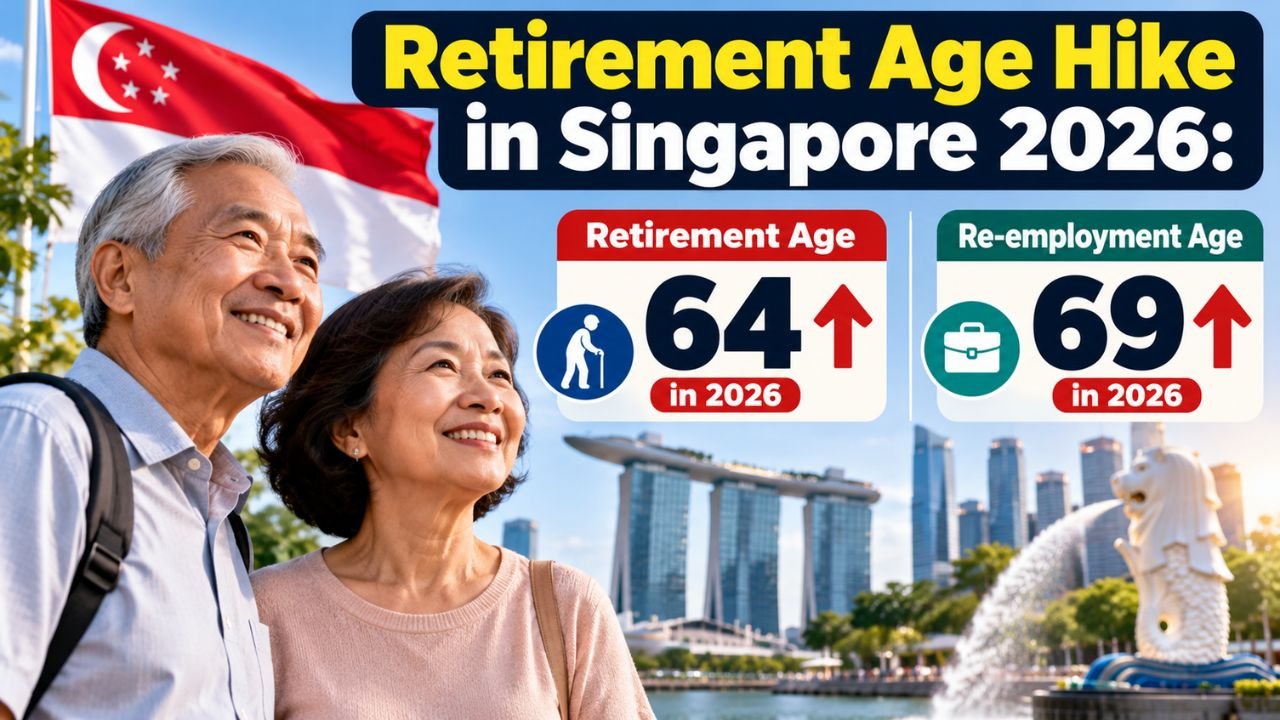
Singapore has increased its retirement and re-employment ages in 2026, giving eligible older workers more time to continue working. From 1 July 2026, the minimum retirement age increased to 64, while the re-employment age increased to 69.
The change is important for employees who want to remain employed beyond their early 60s. It also affects employers, who must follow the updated retirement rules and offer re-employment to eligible workers who wish to continue working.
However, the new rules do not mean that every employee is guaranteed a job until age 69. Workers must meet the applicable re-employment conditions, and the retirement age change does not automatically alter the age at which CPF retirement payouts can begin.
Here is a closer look at Singapore’s retirement age changes in 2026, who is affected and what older employees should know.
What Is the New Retirement Age in Singapore in 2026?
Under the updated rules, Singapore’s minimum retirement age is 64 years from 1 July 2026. The re-employment age has also increased from 68 to 69 years.
The Ministry of Manpower (MOM) introduced these changes as part of Singapore’s longer-term plan to help older employees remain economically active and support their retirement needs.
| Employment rule | Before 1 July 2026 | From 1 July 2026 |
|---|---|---|
| Minimum retirement age | 63 | 64 |
| Re-employment age | 68 | 69 |
These are the updated statutory ages. The rules apply to Singapore citizens and permanent residents covered by the Retirement and Re-employment Act, subject to the relevant conditions.
The changes are part of a longer-term plan. Singapore intends to raise the minimum retirement age to 65 and the re-employment age to 70 by 2030.
What Does the Retirement Age Increase Mean for Employees?
The minimum retirement age sets the age before which an employer generally cannot require a covered employee to retire solely because of age.
With the minimum age rising to 64, eligible employees can remain in employment for longer before reaching the statutory retirement age. This may help workers who want to continue earning a salary, build savings and prepare for retirement.
The re-employment age is different. It determines how long eligible older employees can be offered continued employment after reaching the minimum retirement age.
For example, an employee who reaches the applicable retirement age may be offered a re-employment contract to continue working. The contract may involve changes to duties, working hours or other employment terms, provided the arrangements follow the applicable guidelines.
The increase does not mean that every employee must work until 64 or 69. Employees can still choose to retire earlier, subject to their employment arrangements and other applicable rules.
Who Can Qualify for Re-employment Until Age 69?
Employers must offer re-employment to eligible employees who reach the applicable retirement age, up to the re-employment age.
According to MOM, an employee generally needs to meet these conditions:
- Be a Singapore citizen or permanent resident.
- Have satisfactory work performance, as assessed by the employer.
- Be medically fit to continue working.
- Have worked for the current employer for at least two years before reaching age 64 if they joined that employer at age 55 or above.
The service requirement is particularly relevant for people who change jobs later in their careers. Employees hired before age 55 are not subject to that specific two-year condition, but they must still meet the other applicable requirements.
Meeting the conditions does not guarantee that the employee will retain exactly the same role, salary or benefits. Employers and employees should discuss the terms of the re-employment contract in advance.
What Happens If an Employer Cannot Offer Re-employment?
Sometimes an employer may be unable to find a suitable position for an eligible older employee. MOM provides options for such situations.
The employer may transfer the re-employment obligation to another employer if both the receiving employer and the employee agree. Alternatively, the employer may need to offer a one-off Employment Assistance Payment (EAP), subject to the applicable rules.
The EAP is intended to provide temporary financial assistance while the employee looks for alternative employment. It is not an automatic bonus paid to every worker who reaches retirement age.
Employees who believe their employer has not followed the rules can seek assistance through the relevant MOM or Tripartite Alliance for Dispute Management channels.
Will the Retirement Age Increase Change CPF Payouts?
No. Singapore’s retirement age and CPF payout eligibility age are separate matters.
The increase in the statutory retirement age to 64 does not automatically mean that CPF retirement payouts will begin at 64. Eligible CPF members can generally start their monthly CPF LIFE or Retirement Sum Scheme payouts from age 65, subject to the applicable CPF rules.
This distinction is important for people planning their retirement finances. Reaching the statutory retirement age, continuing to work under a re-employment arrangement and starting CPF payouts are three different matters.
Employees approaching retirement should check their CPF account, understand their expected retirement income and consider how long they plan to remain employed.
How Can Older Workers Prepare for the New Rules?
Employees approaching retirement can take several practical steps to prepare.
Discuss re-employment early. MOM encourages employers to begin discussions well before an employee reaches the retirement age. Eligible employees should communicate their preferences and consider whether alternative duties or working arrangements may suit them.
Review the employment contract. Check the proposed duration, salary, responsibilities, benefits and working hours before accepting a re-employment offer.
Check CPF retirement planning. Understand the difference between employment income and CPF payouts. Do not assume that the statutory retirement age determines when monthly retirement payouts start.
Keep relevant records. Retain employment contracts, performance assessments and written communications about retirement or re-employment in case a dispute arises.
These steps can help employees make informed decisions and give employers more time to plan their staffing needs.
What Is the Future Retirement Age in Singapore?
The 2026 change is one stage of Singapore’s longer-term retirement policy. The Government has stated that the minimum retirement age will rise to 65 and the re-employment age to 70 by 2030.
The aim is to give older workers who are willing and able to work more opportunities to remain employed, while helping businesses retain experienced employees.
The actual effect on an individual will depend on their age, employment history, health, job requirements and whether they meet the relevant re-employment conditions.
Final Words
Singapore’s retirement age increased to 64 and its re-employment age to 69 on 1 July 2026. Eligible older workers can benefit from the updated rules, which provide an opportunity to remain employed for longer.
However, re-employment is subject to specific conditions, and the changes do not guarantee a job for every employee until age 69. They also do not change the general CPF payout eligibility age of 65.
Employees and employers should check the latest information on the official Ministry of Manpower website before making decisions about retirement or re-employment.